

- Material
-
- Aluminium 61
- Brass 8
- Stainless Steel 8
- Galvanised Steel 1
- Mild Steel 1
What Metal Cutting Tolerance Means for Your Project
You measure the recess for a splashback twice, place your order, and then spend the wait wondering whether the cut piece will match what you typed in. That uncertainty is the real cost of not understanding metal cutting tolerance before you order, and it is a gap that does not need to exist.
Get the wrong end of that uncertainty, and the result is a piece that does not sit cleanly in the space, a return you did not budget for, and a fitting job delayed while a replacement is cut. Our metal processing services close that gap with a -0/+2mm tolerance, applied across our aluminium range and other stocked materials, meaning your piece will never arrive shorter than specified, only fractionally longer at most. For a splashback dropped into a tiled recess or a flat bar fitted inside a frame, that is the difference between a clean fit and a return.
Here is what -0/+2mm actually means for your next order, and how to measure with it in mind.
What Is Cutting Tolerance
Cutting tolerance is the acceptable margin of error on a cut, the range a finished piece is allowed to fall within above or below your specified dimension. No cutting process, however precise, produces a perfectly exact result every time.
Numerically controlled equipment gets close. A saw running under numerical control is accurate to a fraction of a millimetre in length and 0.2% of the depth of the cut, according to Steel Construction, the joint industry resource maintained by the British Constructional Steelwork Association (BCSA) and the Steel Construction Institute (SCI). That precision is what makes -0/+2mm a meaningful promise rather than a vague disclaimer [1].
Take an order for 400mm of flat bar. With a -0/+2mm tolerance, you will receive a piece somewhere between 400mm and 402mm, never 399mm, because the minus side sits at zero. That asymmetry is the part most people miss when they first see a tolerance written this way, rather than as a simple plus-or-minus figure.
What Click Metal's -0/+2mm Spec Means in Practice
A tolerance only matters once you put it next to a real job. Order a sheet metal panel for a kitchen splashback against tiled walls, and the difference between a piece arriving at 600mm and one arriving at 603mm is the difference between a clean fit and a return. With -0/+2mm, the worst case is 2mm over, a trim you can sand down rather than a gap you cannot close.
Fitted applications are where this earns its place as a genuine benefit rather than a technical footnote:
- A flat bar cut as a drawer runner must fit within a fixed space.
- A metal angle sized for a fabricated frame has nowhere to hide a gap.
- A garden sculpture or open decorative panel has no such constraint either way.
Cutting by hand introduces a different order of variance entirely. The Health and Safety Executive’s (HSE) good practice guidance on hand-arm vibration, covering manual cutting of steel plate, expects accurate pre-preparation that gets components to size with minimal rework, the old 'measure twice, cut once' principle [2].
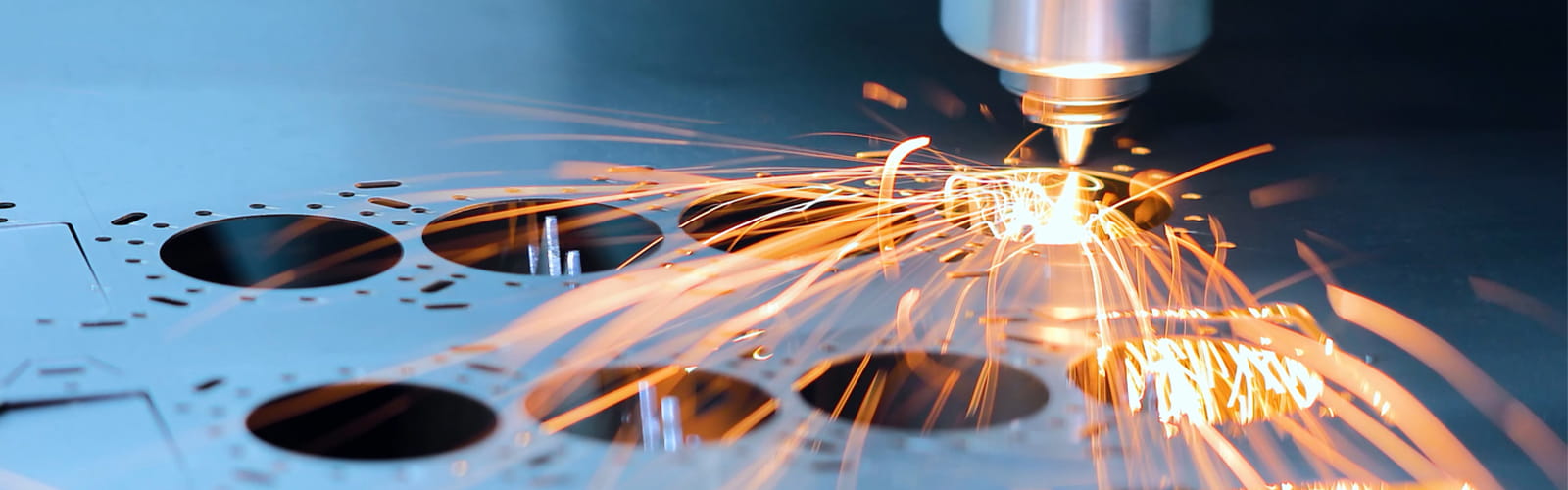
Where manual cutting falls short, the same guidance points fabricators toward Computer Numerical Control (CNC) machining, laser profiling up to around 5mm plate thickness, and abrasive water jet cutting up to 150mm thickness as a cold process with no heat distortion, noting that better accuracy is usually cost-effective too.
An angle grinder or hand saw can drift several millimetres before you even start finishing the edge. Our team applies -0/+2mm across aluminium, steel, galvanised steel, and brass, so the full sheet metal selection carries the same guarantee as everything else on the site.
How To Measure with Tolerance in Mind
Measure the space the metal needs to occupy, not the piece you think you want, and take that measurement twice from the same fixed point. A recess measured from two different corners can give two slightly different numbers, and tolerance cannot fix a measurement that was wrong to begin with.
For a tight fit, consider ordering slightly under the maximum available space rather than exactly to it. A 600mm recess ordered at 598mm leaves a small fitting gap once the piece arrives anywhere up to 600mm, often easier to work with onsite than a piece cut to the absolute limit. The full guide to ordering cut-to-size metal online covers this practical sizing in more detail.
For most DIY projects, ordering to the exact dimension you need works comfortably within the -0/+2mm spec. An extra allowance only matters if the application is genuinely tight or due to finish later.
Never Order Metal Blind Again
Before you understood cutting tolerance, ordering metal online meant typing in a number and hoping for the best. Now you know how -0/+2mm works, the only variable left to manage is your own measurement, which is, after all, the point of measuring twice.
Click Metal built our cut-to-size service around that guarantee. As an online supplier of aluminium, steel, galvanised steel, and brass, our team cuts every order to your specified dimensions, so the only adjustment you are likely to make is the small fitting gap you choose to leave yourself. For bulk or specialist requirements beyond a single project, we can refer you to our parent company, Dore Metals.
Call 01794 526090 or enquire online to get your next piece cut to your exact measurements.
External Sources
[1] SteelConstruction.info, Steelwork Specification: https://www.steelconstruction.info/Steelwork_specification
[2] GOV.UK, Health and Safety Executive (HSE), HAV Good Practice Controls (2026): https://www.hse.gov.uk/vibration/hav/campaign/index.htm
Recent Posts


