

- Material
-
- Aluminium 61
- Brass 8
- Stainless Steel 8
- Galvanised Steel 1
- Mild Steel 1
What Is the Best Metal for a Raised Garden Bed Frame?
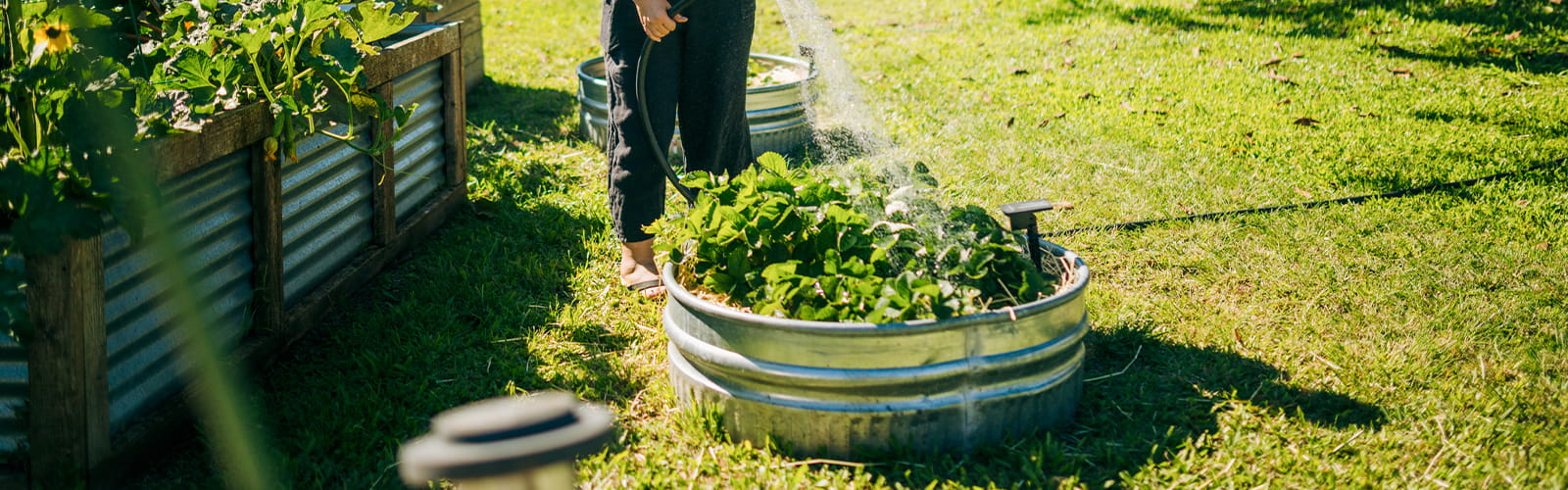
Somewhere in a shed right now sits a stack of swollen, softening timber that used to be a raised bed. It happens to nearly everyone who builds in wood. The frame looks solid going up, then two rainy seasons later the corners are bowing under wet soil, and you're rebuilding the thing you only put up two summers ago.
Now, metal solves that problem, but the best metal for a raised garden bed depends on which trade-off matters most to you. Is it the upfront cost, the ongoing maintenance, the weight, or the finish?
With that in mind, four options are worth weighing up:
- Galvanised steel is strong with no coating upkeep.
- Mild steel is budget-friendly, if you keep on top of it.
- Aluminium is light and coating-free.
- Stainless steel is built to look immaculate.
Picking between them comes down to how the bed will actually be used, not just what's cheapest on the shelf. You can browse the full range of galvanised steel on our website once you've settled on a direction.
But for now, here's how to choose properly.
Galvanised, Mild, Aluminium or Stainless?
For most gardens, galvanised steel is the sensible default. It has the strength to hold soil and moisture without bowing, and the zinc coating means you won't fight rust every spring.
However, there are still three other worthwhile options:
- Mild steel does the same structural job for less money, but only if you're prepared to paint or coat it yourself and keep on top of touch-ups.
- Aluminium is lighter and needs no coating, which suits a smaller or more decorative bed, though it won't take the same knocks as steel on a larger build.
- Stainless steel, on the other hand, handles both jobs well but costs more than the application usually justify for a garden bed.
Cost vs Maintenance is The Trade-Off That Decides It
Think of it as a trade-off between upfront cost and ongoing maintenance. Mild steel is the cheapest to buy but most expensive in the long run, since it needs protecting from day one.
Galvanised steel costs a bit more but needs nothing further for decades. Aluminium sits in the middle on price and needs no maintenance but suits lighter framing rather than a full structural build. Stainless steel is the premium option, worth it if the bed needs to look immaculate rather than just do the job.
If you're weighing this against a timber frame, the same logic applies in reverse. After all, wood is cheaper to buy and far more expensive to replace. You can browse the full range on our galvanised steel hub if that's the direction you're leaning.
Are Galvanised Steel Raised Beds Safe & Rust Resistant?
This is a fair question to ask before you spend a weekend building one. The short answer is yes, on both counts.
Will It Rust & Does It Leach into Soil?
Zinc is there to take the corrosion hit so the steel underneath doesn't have to. In UK conditions, that zinc layer corrodes at under a micron a year, so a standard 85-micron coating gives you more than 85 years of maintenance-free life, according to the Galvanizers Association [1].
Now, that's not a number we've dressed up to sell you steel; it's what the coating is built to do. Leaching is a fair thing to consider for any metal near soil, but it isn't something the durability data actually covers, so we'd rather say that plainly than invent an answer.
Do Plants Overheat in A Metal Bed?
Metal conducts heat faster than wood, so on a warm day the edges of a galvanised bed will feel hotter to the touch than a timber one. It's the wall that heats up, not the root zone a few centimetres in, so this rarely troubles anything you'd realistically grow in a UK garden. If it still bothers you, go up a size. A bigger bed gives you more insulated soil in the middle.
What Are the Disadvantages of Metal Raised Beds?
Metal isn't free of trade-offs. The upfront cost is higher than a basic timber kit, though it evens out once you factor in the cost of rebuilding every few years. You do need to think about gauge and profile rather than just buying whatever's cheapest, since a frame that's too thin will flex under a full load of wet soil.
For the corner framing itself, an angle profile is generally a better choice than flat bar, since it provides the structural rigidity a loaded bed needs at each joint. You can see the full range of metal angle sections we stock if you're speccing a frame from scratch. And if you want a decorative facing over the structural frame, flat bar works well for that without taking on the load-bearing role.
A frame that's too thin flexes under load, which is exactly the failure mode covered in our guide to steel grades and yield strength if you want to spec gauge properly.
Choose the Right Metal for Your Raised Bed
Right now, you're weighing four metals against a timber frame you already know won't last. Get the choice right, and you end up with a bed that holds soil, shrugs off a British winter, and doesn't come back onto your to-do list for decades. This guide has walked through the trade-offs, so the decision is a spec choice, not a guess.
Here's the short version:
- Galvanised steel suits most gardens and needs no upkeep.
- Mild steel costs less but needs regular repainting.
- Aluminium is light, coating-free, best for smaller beds.
- Stainless steel costs more but looks immaculate longer.
- Angle profile beats flat bar for structural corner joints.
Click Metal has spent years helping gardeners and tradespeople get this kind of spec right the first time, so you don't have to guess at gauge or profile on your own. Every order is cut to your exact dimensions, so the frame arrives ready to build rather than needing further work on site. For bulk or specialist requirements beyond a single project, we can refer you to our parent company, Dore Metals.
Call 01794 526090 or enquire online to order galvanised steel angles today.
External Sources
[1] Galvanizers Association United Kingdom & Ireland, Galvanizing Is Durable (2025): https://galvanizing.org.uk/durability-of-galvanizing/
Recent Posts


