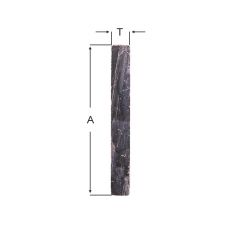
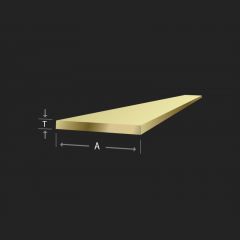
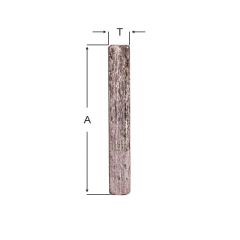
Metal flat bars are long, flat pieces of metal with rectangular cross-sections. They are available in various materials, such as steel and aluminium, and are characterised by their versatility and ease of use in a wide range of applications.
Metal flat bars are used across a wide range of projects, including structural framing, brackets, shelving supports, fencing and railings, furniture framing, and automotive or workshop fabrication. Their simple rectangular profile makes them easy to work into both DIY and light commercial designs.
Flat bar is typically supplied in a mill finish as standard, with options such as polished, brushed, or painted finishes available depending on the material and grade. If you're after a specific look for your project, our team can help point you in the right direction.
The right size depends on the load the bar needs to carry and the span it needs to cover. As a general guide, thinner bars suit decorative or light-duty tasks, while thicker bars are better suited to structural or load-bearing applications. If you're unsure which size is right, our team can help you decide.
Yes, most flat bar can be bent or formed, particularly aluminium and mild steel, which offer good malleability. Stainless steel flat bar can also be bent, though it typically needs more force due to its greater strength. It's worth checking the recommended minimum bend radius for your chosen material and thickness before you start.
Custom-cut flat bar orders usually follow our standard turnaround for cut-to-size metal products, with same-day cutting where possible and dispatch via next-day courier. For particularly large or complex cuts, we'll be in touch with an estimated dispatch date.
There's no minimum order size, so you can order exactly what you need for your project. If you require flat bar in bulk or commercial quantities, we can supply larger volumes via our parent company, Dorè Metals.
Yes, alongside aluminium, stainless steel, and brass, we supply mild steel flat bar, sometimes just called steel flat bar. It's a popular, cost-effective choice for structural framing, brackets, and general fabrication work where corrosion resistance isn't the main priority.
Metal strip generally refers to thinner, narrower lengths of flat material, often supplied in coil form for lighter fabrication or trim work. Flat bar is typically thicker and more rigid, making it better suited to structural or load-bearing applications. If you're unsure which is right for your project, our team can help.
We offer a cut-to-size service across aluminium, mild steel, stainless steel, and brass flat bar, with fast online ordering and nationwide UK delivery. For larger or commercial orders, we can also supply in bulk through our parent company, Dorè Metals.
Yes, we offer a custom cutting service for all our metal flat bars, allowing you to obtain the exact lengths needed for your project, which reduces waste and simplifies installation.
Stainless steel and aluminium flat bars have inherent corrosion resistance, making them suitable for outdoor and marine applications.
The main difference between metal plates and flat bars lies in their size. Metal flat bars are long, flat pieces of metal with rectangular cross-sections and are thinner compared to flat plates. If the fabrication is wider than 8 inches, it is considered a metal plate instead.
Yes, metal flat bars are weldable. Welding allows for the fabrication of more complex structures and assemblies.
The maximum thickness available for our aluminium flat bar is 40 mm whilst our maximum thickness available for our stainless-steel flat bar is 30 mm. The maximum thickness of our brass flats bars is 50mm.