

- Material
-
- Aluminium 61
- Brass 8
- Stainless Steel 8
- Galvanised Steel 1
- Mild Steel 1
How to Join Aluminium Box Section Without Welding at Home
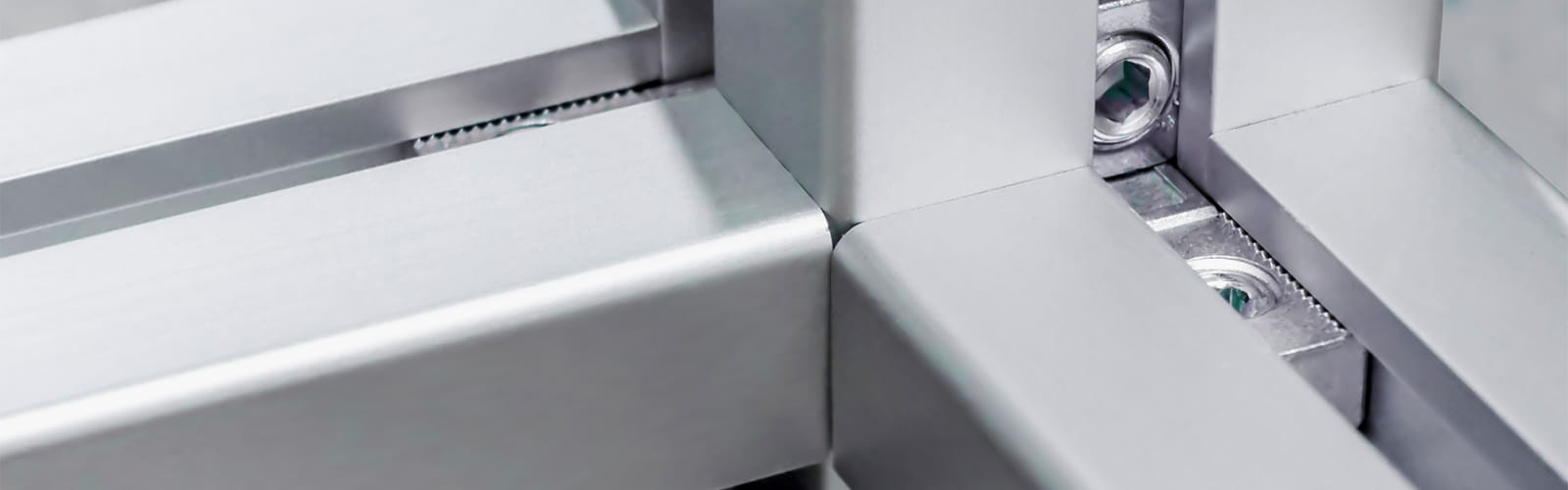
A half-built aluminium frame in the shed usually means one thing. Its owner has decided that the next step requires a welder they don't have.
That assumption costs people finished furniture, and it's rarely the mitre's fault. Learning how to join aluminium box section without welding takes the excuse off the table, with three methods that get the job done. Aluminium box sections cut to your exact dimensions leave the fitting work at the joint, not along the length.
Here's what separates them:
- Mechanical fixing suits a joint you might take apart and redo.
- Adhesive bonding suits a finish with nothing on show.
- Brazing suits a permanent bond without mains welding gear.
None of them needs equipment most DIY builders don't already have access to. Aluminium box sections cut to your exact dimensions leave the fitting work at the joint, not along the length.
Below, we break down which one fits your frame.
Bolt It Together for a Frame You Can Take Apart
Corner brackets, self-tapping screws, or through bolts give you the strongest joint in this line-up, and the only one you can undo. Get a mitre wrong, and you can back the screws out and try again. Glue and braze don't give you that same do-over.
Screw choice matters more than most first-time builders expect. Coarse-pitch self-tapping screws bite into softer aluminium, while fine-pitch threads suit harder alloys, according to the European Aluminium Association's (EAA) guide to mechanical joining. Mismatch the two and the screw strips the hole instead of gripping it [1].
There's one thing worth pressure-testing before you build. Mixing steel fixings with aluminium in a damp spot invites galvanic corrosion, so stick to aluminium or stainless fixings outdoors. More detail sits in our guide to joining aluminium without welding.
Prep the Joint Before You Reach for a Screw
Three steps separate a tight joint from a wobbly one:
- Cut the mitre to a matching angle on both mating faces.
- Drill a pilot hole before driving any self-tapping screw.
- Check the screw pitch suits the wall thickness you're fixing into.
Glue Aluminium for a Finish with No Visible Fixings
Glue means no screws and no brackets, just a clean line, if you're willing to do the surface prep right. Skip that step, and the joint fails, because aluminium forms an oxide layer the moment it's cut. That layer will quietly sabotage an adhesive bond unless you remove or roughen it first, according to The Welding Institute’s (TWI) overview of aluminium joining methods [2].
An abrasive pass and a solvent wipe make the difference between a joint that holds and one that lets go under load. Clamp for the adhesive's full stated cure time, not until it feels solid. It suits decorative frames and light-use furniture but skip it for a corner under constant racking stress, like a workbench leg.
Braze Aluminium for a Permanent Joint Without a Welder
Brazing uses a filler metal that melts above 450°C, still well below aluminium's melting point, according to TWI's definition of brazing [3]. That gap between filler and parent metal is what keeps distortion low. It also means no mains power or gas rig is required, unlike a full weld.
Clean both surfaces back to bare metal first, since any oxide or residue stops the filler from flowing properly into the joint. Heat the joint evenly with a torch, then feed the filler rod in once the metal reaches temperature and let it cool undisturbed. The result is a permanent metallic bond, so it suits corners you won't need to adjust again once the frame is built. For the full process and how it compares to a proper weld, see our guide on brazing aluminium.
Bolting, gluing and brazing aren't the only options if your build has different demands. Riveting and bolting sit alongside brazing in a wider comparison of aluminium joining methods, worth a look if none of the three above quite fits.
Which Joining Method Suits Your Frame?
Before reading this, a decent aluminium box section frame probably meant hiring or borrowing a welder you didn't have the skill or kit to use confidently. After it, that assumption doesn't hold: three realistic methods get a frame built and joined properly without a torch or mains welding gear in sight. The right one just depends on the job in front of you, not on how confident you feel with a welder.
Here's the choice in short:
- Mechanical fixing gives strength and the option to take it apart.
- Adhesive bonding gives a clean finish with nothing on show.
- Brazing gives a permanent joint without a mains welding kit.
Click Metal has supplied cut-to-size aluminium since 1994, including the box section behind every one of these joining methods. Every order is cut to your exact dimensions, so whichever method you choose, the joint fit is one less thing to get wrong. If your build needs a specialist grade or a larger commercial quantity, our team can point you towards Doré Metals as well.
Enquire online or call 01794 526090 to order aluminium box section cut to size for your frame.
External Sources
[1] European Aluminium Association (EAA), Mechanical Joining (2015): https://european-aluminium.eu/wp-content/uploads/2022/11/8-mechanical-joining_2015.pdf
[2] TWI, What Are The Most Common Methods of Joining Aluminium? (2024): https://www.twi-global.com/technical-knowledge/faqs/what-are-the-most-common-methods-of-joining-aluminium
[3] TWI, What is Brazing? (Definition, Methods) (2015): https://www.twi-global.com/technical-knowledge/faqs/faq-what-is-brazing
Recent Posts


