

- Material
-
- Aluminium 61
- Brass 8
- Stainless Steel 8
- Galvanised Steel 1
- Mild Steel 1
How to Cut Metal Angle for a Sturdy DIY Shelf Frame
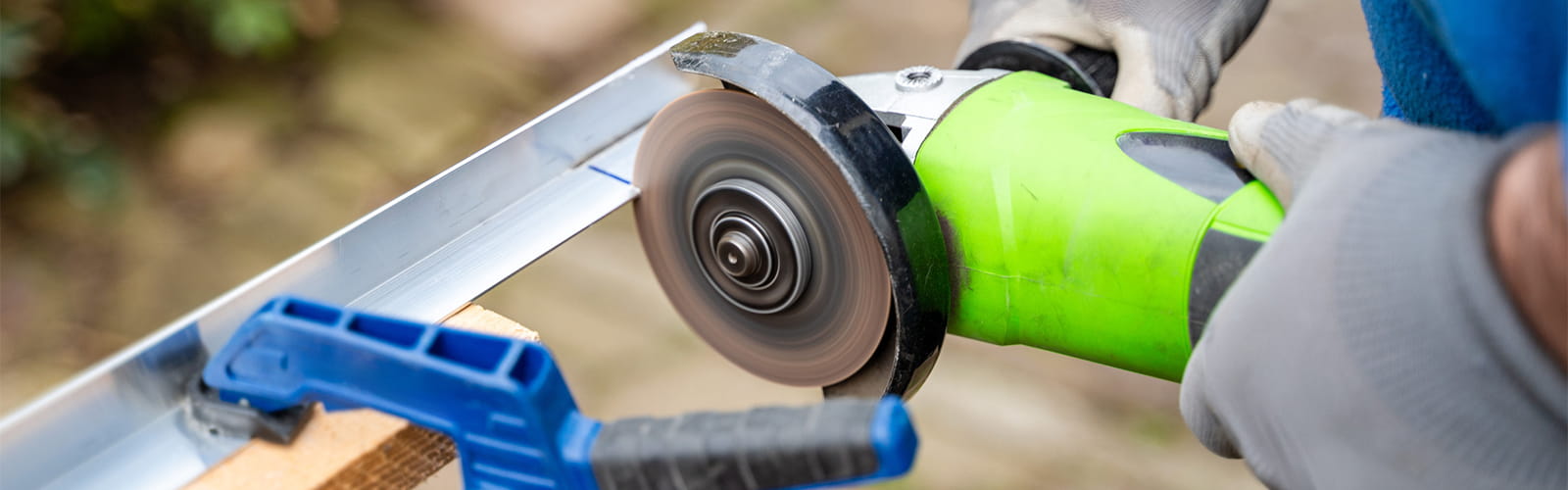
A shelf frame that won't sit flush almost always comes down to the cut. Get either the cut or the bracket sizing wrong and the frame will tell you, usually by sagging or refusing to sit flush. Learning how to cut metal angles accurately and sizing the fixings to match is what separates a frame that holds from one you end up packing out.
If you'd rather skip the cutting stage altogether, you can order it from us already cut to size to a tight -0/+2mm tolerance. Either way, the steps below cover what actually makes a frame hold.
This guide covers three things:
- Measuring and cutting metal angle square every time
- Sizing brackets so the shelf carries its load
- Fixing the frame to the wall securely
Here's how to get a shelf frame that holds.
How To Measure & Cut Metal Angle Accurately
Mark the cut line on both faces of the angle before you cut and keep it square with a combination square. Support the offcut too, so the metal doesn't pinch the blade halfway through. A clean square cut is what makes your corner joints line up when the frame goes together.
Measure the space, not the piece you think you need, since walls are rarely square. A shelf frame needs to sit inside the gap, not fight it. Mark your line with a scriber rather than a pencil, since a pencil mark can shift the cut by a millimetre, and that shows at the joint.
Tools that Work for Cutting Metal Angle at Home
Three tools cover most home jobs:
- A hacksaw with a fine blade suits thin angle and small jobs.
- An angle grinder with a thin disc handles thicker stock faster.
- A chop saw gives the cleanest edge if you already own one.
Clamp the angle before you cut it, since a piece that shifts mid-cut will bind the blade and throw the line off square. Deburr the cut edge with a file so it doesn't mark the wall or your hands. For drilling the fixing holes in the cut ends, mark and centre-punch first so the bit doesn't wander.
If cutting metal is becoming a regular fixture rather than a one-off, it's worth thinking through how you'd set up a proper home metalworking shop before your third project.
How Deep & How Strong Does Your Bracket Need to Be
Make the bracket at least two-thirds the depth of the shelf. Use two brackets for anything up to a metre and add a third for every 500mm beyond that. Section size matters more than wall thickness for resisting sag under load.
A light shelf holding ornaments needs far less than one loaded with books. For most domestic loads, 25x25x3mm equal angle suits brackets under 300mm, while anything longer or heavier is safer in 30x30x3mm or 40x40x4mm. Stick with aluminium equal angle at this size and you'll save weight over steel without giving up rigidity for a standard shelf load.
A diagonal brace, welded or bolted, between the wall upright and the front edge, prevents the shelf from sagging forward, and it's worth the extra cut even on a modest frame.
How To Fix Metal Angle to The Wall Securely
Match the fixing to the wall it's going into, rather than to the shelf size. Masonry, timber studs, and plasterboard each need a different approach, which is where most DIY fixings go wrong.
Wall type decides the fixing:
- Solid masonry takes a plug and screw sized to the load.
- A timber stud takes a screw driven straight into the wood.
- Plasterboard alone needs a cavity fixing rated for the load.
A few habits separate a fixing that holds from one that doesn't:
- Check for pipes and cables, and locate a stud, before you drill.
- Level the frame first, or a skewed bracket throws off the whole shelf.
- Tighten screws until snug, not forced, to avoid cracking plasterboard.
Where two lengths meet at a corner, a bolted joint is easier to adjust on site than a welded one, and strong enough for most frames. It's also simpler to redo later if the fit's slightly off.
Get the Cut Right & Get a Shelf That Holds
Before you started, a slightly wrong cut could have meant a shelf that never sat flush, brackets that rocked, or a bracket sized wrong for the load. Now you know how to mark and cut the angle square, size the bracket to suit the span, and match the fixing to the wall it's going into. The frame that holds is the one where the cut was accurate, and the fixing was right, not the one built with the priciest tools.
Click Metal supplies equal and unequal angle cut-to-size in aluminium, steel, galvanised steel, and brass, delivered UK-wide, so there's no need to visit a trade counter. If your project needs a larger run than a single-shelf frame, the team can point you to Doré Metals for bulk supply. Either way, accurate cutting is what makes fixing the only job left.
Call 01794 526090 or enquire online to get your metal angle cut to size and skip the second trip to the workshop.
Recent Posts


