

- Material
-
- Aluminium 61
- Brass 8
- Stainless Steel 8
- Galvanised Steel 1
- Mild Steel 1
Mild Steel vs Galvanised Steel: Choosing the Right Material
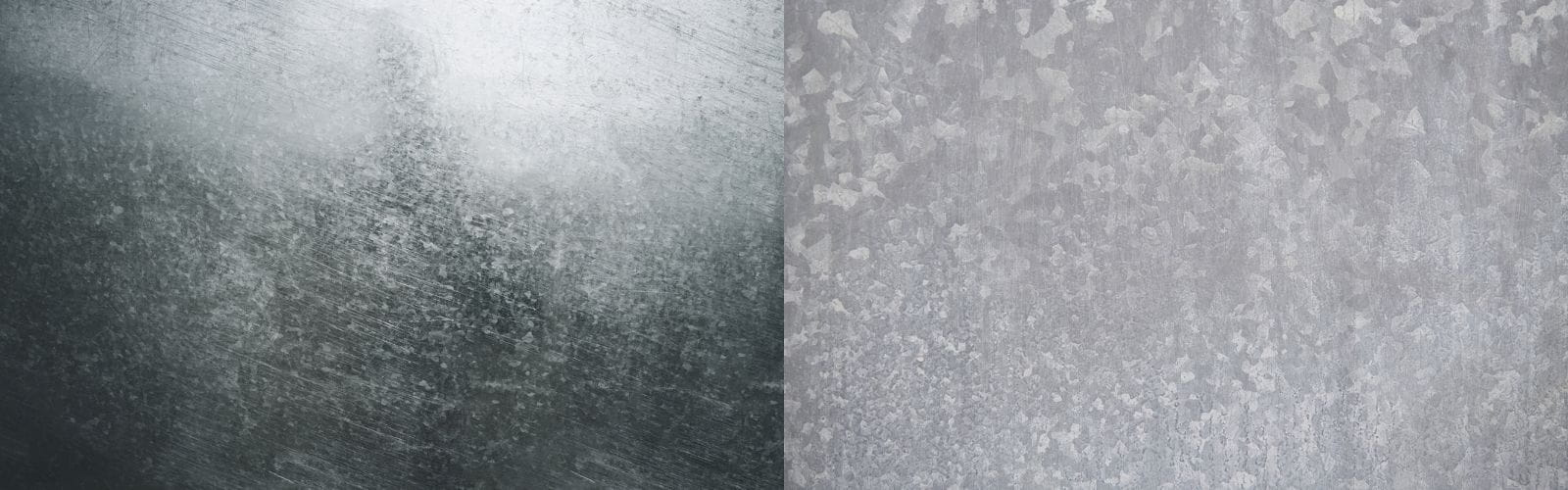
Picture two gate frames, built to the same spec, fitted on the same day. One is mild steel, one is galvanised steel. A year later, one is holding up. The other has rust along the bottom rail.
Same weld. Same dimensions. One zinc coating and an environment that made it matter. That is the mild steel vs galvanised steel question in practical terms. It’s not which metal is better, but which holds up in your conditions.
This guide covers:
- What the zinc coating does and when it changes the outcome.
- How to match the material to the environment: indoors, outdoors, or coastal.
- Where the galvanised premium is justified, and where it is not.
Once the logic is clear, the decision makes itself.
What Sets Galvanised Steel Apart from Mild Steel
Galvanised steel is mild steel coated in zinc through a hot-dip process. The base metal is identical. What you are paying for is corrosion protection.
How The Zinc Coating Works & Keeps Protecting
The zinc layer does two things. First, it acts as a physical barrier, blocking moisture and oxygen from reaching the steel surface. Second, if the surface is scratched, the surrounding zinc corrodes rather than the steel beneath. This sacrificial action prevents damage from spreading laterally into the base metal.
Over time, the zinc reacts with the atmosphere to form a stable patina. This patina is insoluble in rainwater and slows the rate of zinc loss, extending the working life of the coating considerably.
What Happens to Mild Steel Without a Protective Coat
Unlike galvanised steel, mild steel rusts when oxygen and moisture reach its surface. The Health and Safety Executive’s (HSE) technical guidance on external corrosion confirms that rusting proceeds through the formation of iron oxide, and that painting to an appropriate specification will significantly extend the period before corrosion sets in. How long that protection lasts depends largely on the quality of surface preparation at the time of application [1].
In dry, controlled environments, a well-applied primer holds well. Where conditions vary, such as outdoor exposure, moisture, and temperature cycling, the protection requires ongoing attention.
Finishing is a meaningful part of keeping mild steel in service. Powder coating and painting are the most common approaches for outdoor-exposed components.
Choosing by Project Type
Your environment makes the decision for you. The Galvanizers Association UK reports that average atmospheric zinc corrosion rates across the UK and Ireland are normally below 1µm per year, meaning a standard 85µm hot-dip coating can provide over 85 years of maintenance-free life in typical outdoor conditions. For a gate frame or garden structure, longevity is the deciding factor [2].
Indoor Applications Where Mild Steel Makes Sense
For work that stays dry and protected, mild steel is the practical default. It suits:
- Structural steel in internal framing, shelving, and machinery bases.
- Workshop builds, brackets, and construction work in controlled environments.
- Medical equipment frames and supports that are housed indoors throughout their life.
The cost advantage over galvanised is meaningful at volume. Where corrosion is not a factor, you are not paying for something you do not need.
Outdoor Applications Where Galvanised Earns Its Cost
Any outdoor steel, such as gate frames, garden structures, external fixings, and fencing posts, is exposed to rain, temperature cycling, and surface moisture. Galvanised steel can handle this without the maintenance cycle that uncoated mild steel requires. This is why galvanised is the default for transport applications such as vehicle chassis and trailer frames, where road spray and weather exposure are continuous.
Mild steel sheet used in outdoor builds typically needs protective treatment before it leaves the workshop. Cutting your material to exact dimensions first reduces the amount of exposed cut edge that needs sealing.
For both sheet materials supplied, our sheet metal category covers the full range of grades and thicknesses available to order.
When the Coastal Environment Changes the Calculation
Salt-laden air accelerates zinc depletion faster than standard atmospheric conditions. Galvanised steel remains a sound choice for coastal garden structures and above-water fittings. For anything in direct contact with seawater or under sustained salt spray, stainless steel is the stronger long-term call. The zinc layer is not thick enough to justify galvanising as a permanent solution in those conditions.
The Real Cost Difference & One Fabrication Factor to Know
Galvanised steel costs more upfront than mild steel and the gap is consistent across most product sizes and grades. On longer-term outdoor projects, that premium is usually offset by lower maintenance costs and a longer working life. Mild steel used outside without a maintained paint coat will corrode and require treatment or replacement.
On the fabrication side, mild steel is more straightforward. It welds cleanly across all common processes. Galvanised steel can be welded, but the zinc coating burns off, releasing zinc fumes.
The HSE identify metal fume fever as a specific risk when welding galvanised metals and recommends local exhaust ventilation to control exposure. If your project involves significant fabrication, mild steel may be the more practical starting point, with protective treatment applied once the work is complete [3].
Where a project involves drilling, cutting, or shaping before protective treatment is applied, understanding the basics of mild steel fabrication helps with planning the sequence correctly.
The Right Steel for the Right Job
Before reading this, the choice between mild and galvanised may have seemed like a simple upgrade question. It is more specific than that. Mild steel works well indoors, where dry conditions make corrosion protection unnecessary. Galvanised earns its cost outdoors, where moisture and weather would work against uncoated steel.
Match the material to the environment, and neither choice is wrong:
- Mild steel is the practical default for dry indoor environments and controlled environments.
- Galvanised is the right call for anything exposed to weather, moisture, or temperature cycling.
- Coastal conditions may require stainless steel rather than galvanised steel for long-term work.
Click Metal supplies both mild steel and galvanised steel sheet, cut to your exact dimensions with a tolerance of -0/+2mm. Orders are placed online and delivered UK-wide, with no trade counter and no minimum order. For bulk or specialist requirements, we can refer you to our parent company, Doré Metals.
Call 01794 526090 or enquire online to confirm which material suits your project before you order.
External Sources
[1] GOV.UK, Health and Safety Executive (HSE), Corrosion / Selection of Materials: https://www.hse.gov.uk/comah/sragtech/techmeasmaterial.htm
[2] Galvanizers Association UK, Galvanizing is Durable: https://galvanizing.org.uk/durability-of-galvanizing/
[3] GOV.UK, Health and Safety Executive (HSE), Health Risks From Welding: https://www.hse.gov.uk/welding/health-risks-welding.htm
Recent Posts


