

- Material
-
- Aluminium 61
- Brass 8
- Stainless Steel 8
- Galvanised Steel 1
- Mild Steel 1
Should I Powder Coat Galvanised Steel for Extra Protection?
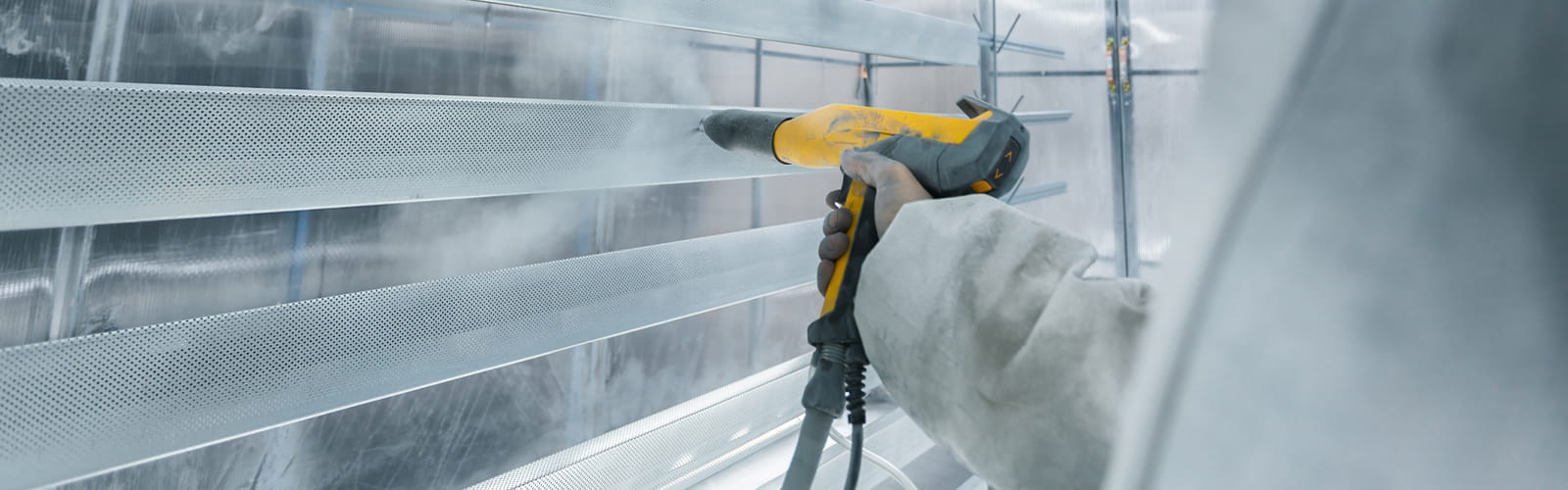
When you powder coat galvanised steel, you create a duplex protection system. The zinc layer protects the steel beneath, while the powder coating adds a barrier that reduces direct exposure to moisture, salt, and airborne pollutants.
This option tends to make the most sense for external steelwork in coastal, industrial, or high-traffic locations. These environments increase exposure and can lead to earlier weathering, even when the base metal is galvanised. In lower exposure indoor settings, galvanising alone may be sufficient.
This guide explains how duplex protection works, when it offers measurable benefit, and how correct surface preparation supports long-term performance.
How Duplex Protection Extends the Life of Steel
Duplex protection refers to applying an organic coating, such as powder coating or paint, over galvanised steel. The zinc layer provides sacrificial corrosion protection, while the outer coating limits direct environmental contact.
According to the Galvanizers Association, duplex systems can extend the economic life of steel, add colour for identification or aesthetic purposes, and provide additional defence in aggressive environments [1]. However, coating systems must be compatible with galvanised substrates and applied in line with manufacturer guidance.
Duplex protection is typically specified where durability expectations are higher, and maintenance access is limited.
The Advantages of Powder Coating Galvanised Steel
Powder coating adds a sealed barrier over galvanised steel. This helps control surface deterioration in environments with more demanding exposure conditions.
The Environment Agency’s 2020 review of asset deterioration notes typical atmospheric corrosion loss of steel at approximately 0.01mm per year in normal conditions and around 0.02mm per year in marine-influenced environments. In marine splash zones, rates can reach 0.15mm per year per exposed face, depending on severity [2].
Key advantages of powder coating over galvanising alone include:
- Improved corrosion resistance in coastal, industrial, and high-traffic areas.
- Longer maintenance intervals, reducing repainting and downtime.
- More consistent colour finish for outdoor railings, frames, and façades.
- Reduced surface staining, chalking, and visible weathering marks over time.
- Added barrier protection to support overall longer service-life targets.
For external fencing, balustrades, and frames, duplex systems provide added protection where corrosion risk is elevated.
Surface Preparation That Protects Your Investment
When you powder coat galvanised steel, adhesion depends on a clean and stable surface. Oils, residues, or handling contamination can compromise coating performance if not removed.
Guidance from the Department for Environment, Food & Rural Affairs (DEFRA) identifies two preparation routes:
- Mechanical cleaning, such as abrasive blasting.
- Chemical pre-treatment, including alkaline or acid cleaning, followed by drying.
Coating systems must follow the manufacturer's curing requirements. Typical curing temperatures range between 120 and 230°C, with oven control maintained within specified tolerances [3]. Preparation and process control directly influence coating longevity.
If you are sourcing material for duplex coating, we supply galvanised steel sheets cut to your exact measurements to help support accurate fabrication and finishing.
Where Duplex Coating Makes the Most Sense
Duplex-coated galvanised steel is particularly suited to locations with elevated corrosion risk. Coastal environments present higher exposure due to salt deposition carried inland by wind.
A UK coastal guidance report produced by Trees for Cities and Forest Research notes that salt deposition most frequently occurs within 500 metres of the shoreline [4]. In practical terms, this is the zone where external steelwork is most likely to corrode rapidly if not protected by a coating system.
Common applications include:
- Coastal fencing and perimeter structures.
- Public realm railings and balustrades.
- External frames exposed to driving rain.
- Fabricated components near ports or industrial facilities.
- Steelwork in locations with limited access.
In lower-risk indoor environments, galvanising alone may be sufficient. Duplex coating is typically justified when the location is close to the coast, maintenance access is limited, or a specified colour finish is required.
For sectors that regularly work in exposed environments, you can view the industries supported by our team on our sectors page.
Why Choose Click Metal for Galvanised Steel
Selecting the right base material is the first step in any protective coating system. If you are planning to powder coat galvanised steel, you need consistent quality, reliable dimensions, and a finish that supports good preparation and adhesion. Working with a reliable supplier helps maintain quality and reduce delays.
Click Metal supplies galvanised steel suitable for powder coating and other protective finishes, backed by over 70 years of experience in the metals industry. We can provide powder coating as an optional finish to your order – just contact us to discuss your requirements. Materials are cut to your exact measurements and available for online ordering, making them suitable for renovation, fabrication, and custom projects. Nationwide delivery supports both DIY and light commercial use, with larger or commercial quantities available through our parent company, Dore Metals.
Call 01794 526090 or enquire now to discuss galvanised steel supply for your next project.
External Sources
[1] Galvanizers Association, “duplex systems can extend the economic life of steel”: https://galvanizing.org.uk/painting-and-powder-coating/
[2] GOV.UK, The Environment Agency, “2020 review of asset deterioration”: https://assets.publishing.service.gov.uk/media/6038cf648fa8f504904f7755/Impact_of_climate_change_on_asset_deterioration_-_appendix_A.pdf
[3] GOV.UK, The Department for Environment, Food & Rural Affairs (DEFRA), “identifies two preparation routes”: https://assets.publishing.service.gov.uk/media/5a80af72ed915d74e33fbd40/powder-coating-including-sherardizing-and-vitreous-enamelling-dry-process-guidance-note-6-31_13_.pdf
[4] Trees for Cities and Forest Research, "salt deposition most frequently occurs within 500 metres of the shoreline”: https://www.treesforcities.org/downloads/files/TFC_COASTAL_DOCUMENT_FEBRUARY_2023_SMALL_FA.pdf
Recent Posts


