

- Material
-
- Aluminium 61
- Brass 8
- Stainless Steel 8
- Galvanised Steel 1
- Mild Steel 1
How To Start Using a Lathe for Simple Metal Projects
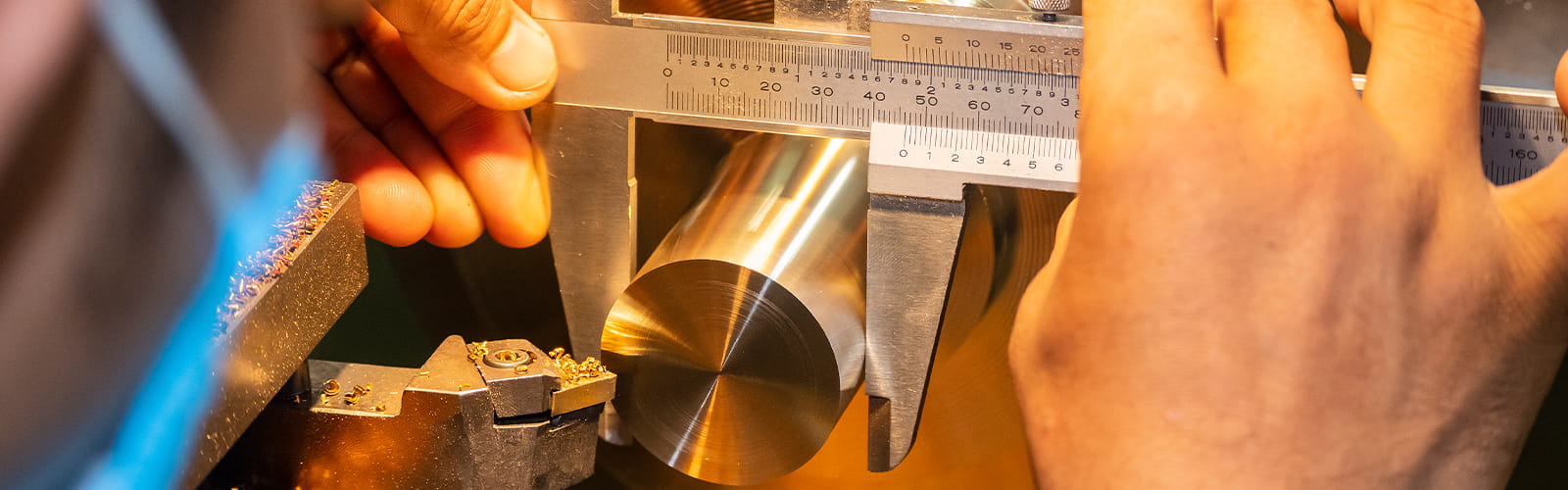
Using a lathe involves rotating metal stock while a cutting tool shapes it into precise cylindrical parts. For beginners, this usually begins with core operations such as facing, straight turning, and parting on a round metal bar.
In most cases, the objective is practical. You may need a spacer, bush, or short shaft that fits accurately within an assembly, so the key is learning how to:
- Secure the workpiece.
- Position the tool correctly.
- Approach the first cut methodically.
Inconsistent setup or unsuitable stock can affect dimension and surface finish. With structured preparation and steady technique, even a compact manual lathe can produce dependable results.
This guide explains what a metal lathe is used for, how to prepare it safely, and how to carry out essential operations using materials such as stainless steel round bars.
What Is a Metal Lathe Used For?
A metal lathe produces cylindrical components that require rotational symmetry and dimensional consistency. By spinning the material against a fixed cutting edge, the machine progressively reduces the bar's diameter.
Turning remains central to UK engineering. The Institution of Mechanical Engineers (IMechE) and the National Physical Laboratory (NPL) report that the UK spends £58.3 billion annually on measurement activities, with 6.3% of the workforce involved in roles that require measurement skills [1].
This reinforces the importance of dimensional accuracy in even small workshop projects. Learning to face squarely and reduce diameter evenly develops a practical understanding of tolerance and fit.
When starting out, choose straight, undistorted round stock. This simplifies alignment and supports stable cutting from the first pass.
Set Up Safely Before You Make Your First Cut
Preparation should be completed before switching the machine on. Clamp the workpiece securely in the chuck and keep the overhang to a minimum to limit vibration. Remove the chuck key immediately after tightening, then rotate the spindle by hand to confirm that the tool and workpiece clear the chuck and toolpost.
Personal protective equipment must reflect the hazards present. The Health and Safety Executive (HSE) notes that eye risks include metal splashes, dust, and projectiles, and lists safety spectacles, goggles, face shields, and visors as suitable forms of protection [2].
Before your first cut:
- Confirm the tool is set to centre height.
- Check the workpiece runs true.
- Select a moderate spindle speed.
- Apply a suitable cutting lubricant.
- Clear loose swarf from the work area.
A careful setup supports stable cutting and reduces avoidable errors.
Choose the Right Tools & Materials from the Start
When using a lathe, tool geometry directly affects chip formation and surface finish. A properly ground cutting edge with adequate clearance reduces friction and limits heat at the cutting point.
High-speed steel tools are often suitable for early projects because they operate well at moderate speeds and can be adjusted easily. Carbide inserts retain sharpness over longer runs but benefit from a rigid setup and steady feed.
Material behaviour also varies. The British Stainless Steel Association (BSSA) explains that stainless grades differ in strength, ductility, and corrosion resistance depending on composition [3]. Higher tensile grades require greater cutting force, which influences feed rate and lubrication. If you are comparing grades before machining, our guide to stainless steel grades provides further detail.
For lighter-duty practice, aluminium round bars offer lower cutting resistance. However, if you are weighing aluminium against steel, see aluminium vs steel: what’s the difference.
Simple Operations When Using a Lathe
Beginner projects follow a defined machining sequence. Establishing a reference surface first ensures later cuts align correctly.
Approach your projects like so:
- Facing creates a flat datum surface.
- Turning reduces the diameter toward the final size.
- Chamfering prepares edges for assembly.
- Parting off separates the finished part.
Following this order limits cumulative error. Reduce depth incrementally as you approach the final dimension.
Drilling from the tailstock can be introduced once external turning feels controlled. Centre drilling first improves concentric alignment before progressing to full-depth drilling.
For project ideas that combine simple turning with fabrication, our guide to aluminium angle brackets DIY projects shows how precision-cut components can be incorporated into practical builds.
Get the Right Round Bar for Your Next Project
Consistent stock simplifies setup and supports accurate machining. A straight, uniform, round bar reduces adjustment time and improves tool engagement from the first pass.
Focus on:
- Keeping the slideways clean and lightly lubricated.
- Checking toolpost clamping and tool condition before each session.
- Clearing swarf buildup around the chuck and work area.
Click Metal supplies round bar cut to your exact measurements, suitable for renovation, fabrication, and custom projects, with nationwide UK delivery. For additional project guidance and material comparisons, visit our blog.
Call 01794 526090 or enquire now to discuss the right round bar size for your project and order cut to your exact measurements.
External Sources
[1] The Institution of Mechanical Engineers (IMechE) & The National Physical Laboratory (NPL), "the UK spends £58.3 billion annually on measurement activities, with 6.3% of the workforce involved in roles that require measurement skills”: https://www.imeche.org/docs/default-source/1-oscar/reports-policy-statements-and-documents/power-of-precision_2025_report_digital-01_03.pdf
[2] The Health and Safety Executive (HSE), "eye risks include metal splashes, dust, and projectiles, and lists safety spectacles, goggles, face shields, and visors as suitable forms of protection”: https://www.hse.gov.uk/ppe/using-the-right-type-of-ppe.htm
[3] The British Stainless Steel Association (BSSA), "stainless grades differ in strength, ductility, and corrosion resistance depending on composition”: https://bssa.org.uk/bssa_articles/50-grades-of-stainless-steel/
Recent Posts


