

- Material
-
- Aluminium 61
- Brass 8
- Stainless Steel 8
- Galvanised Steel 1
- Mild Steel 1
What Are Metal Box Sections? SHS, RHS & Thickness Guide
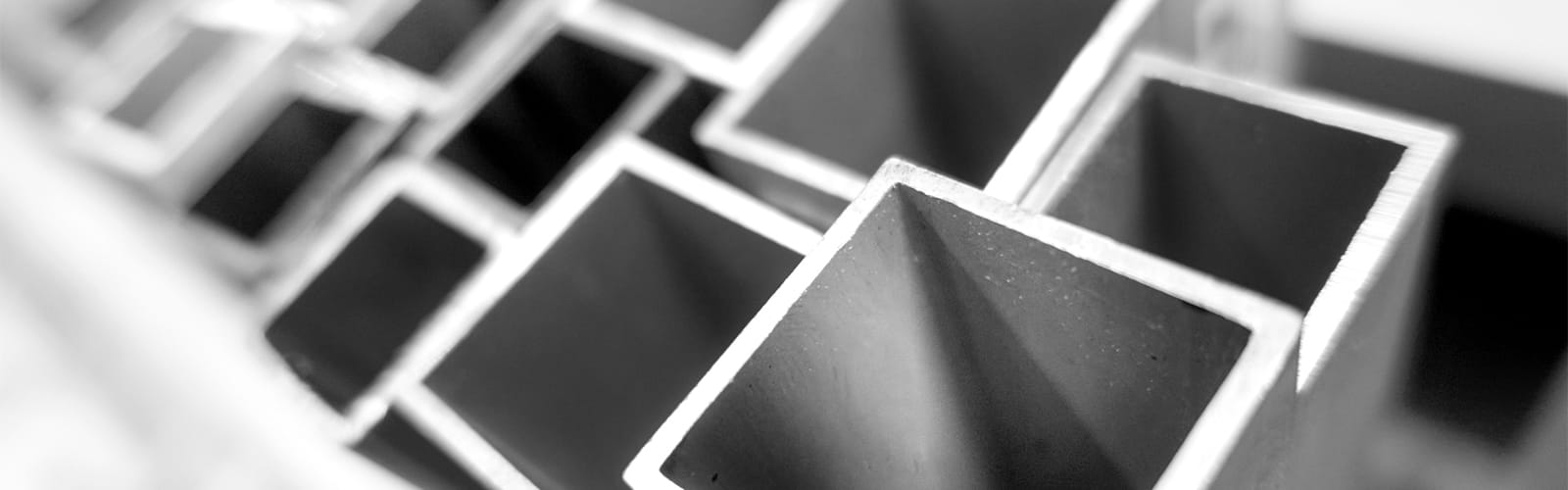
Metal box section appears on material lists for everything from trailer chassis to kitchen shelving supports, but it is not always obvious which profile, material, or wall thickness is the right call for a given job. If the order is too light, then the structure flexes under load. Order the wrong profile, and obtaining the connection details becomes difficult.
The good news is that the decisions are simple once the basics are clear. Browse the full range to see what is available in aluminium and stainless steel, and read on for a plain-terms guide to what separates one profile from another.
This guide covers what box sections are, how they are categorised, what they suit, and how wall thickness affects performance in practice.
SHS or RHS? How to Tell Them Apart
These two abbreviations appear constantly when you are shopping for box section:
- SHS stands for Square Hollow Section, where all four sides are equal.
- RHS stands for Rectangular Hollow Section, where the width and height differ.
Both are hollow structural profiles with uniform wall thicknesses. SteelConstruction.info, maintained by the Steel Construction Institute and BCSA, confirms that hollow sections are defined by a serial size comprising outer dimension and wall thickness. Hot finished sections are governed by BS EN 10210-2; cold formed by BS EN 10219-2. The two processes produce different residual stress profiles, so substituting one for the other on a structural job needs a design check first [1].
SHS suits frames and supports with equal loading in all directions. RHS suits applications that require greater depth in one plane, such as a lintel, a trailer rail, or a long horizontal span under vertical load.
What Can You Use Metal Box Sections For?
Box sections are among the most widely specified profiles in fabrication because they carry load efficiently in multiple directions while remaining hollow and relatively light. That combination suits a wide range of projects.
Common uses include:
- Furniture and workbench frames requiring a clean, rigid structure.
- Garden gates, pergola posts, and boundary structures built to last outdoors.
- Trailer and vehicle chassis components where strength-to-weight ratio matters.
For an example of metal sections used in a creative structural project, the Duncan Hutchinson Pauchle Saorsa case study shows how hollow sections can be applied in bespoke fabrication.
Where Does Aluminium Box Section Fit?
Aluminium box section suits projects where corrosion resistance and low weight are the priorities. It will not rust without treatment, handles outdoor exposure well, and is easier to lift and position on site than steel. It is a good choice for signage frames, display structures, lightweight outdoor furniture, and any project where moisture is likely to come into contact with it. From marine to medical sectors, aluminium hollow sections are a standard structural choice.
Where Does the Steel Box Section Fit?
A mild steel box section is the stronger, more cost-effective option for heavier structural work. It welds cleanly, machines well, and holds coatings reliably. Left uncoated outdoors, it will rust, so any external application needs priming, painting, or a galvanised finish. For indoor frames, workshop builds, and general fabrication where budget and weldability matter, mild steel remains the practical default.
Box Section Sizes & Wall Thickness Explained
Choosing the right size means understanding three numbers: external width, external height, and wall thickness. A 40 x 40 x 3mm SHS is 40mm square on the outside with 3mm walls throughout. The internal void makes it lighter than a solid bar; the wall gives it its load-bearing capacity.
SteelConstruction confirms that hollow sections are defined by outer dimension and wall thickness, governed by BS EN 10210-2 for hot finished sections and BS EN 10219-2 for cold-formed. Wall thickness is the primary variable governing load performance: thicker walls resist buckling and handle greater bending loads. For light framing and furniture, 1.5 to 2mm is usually sufficient. For load-bearing structures and gates, 3mm or above is worth specifying. Always confirm your connection details before ordering.
If you are working on a project that needs precise sizing across multiple profiles, the sheet metal and flat bar ranges follow the same cut-to-size process and may be worth reviewing alongside box section.
How to Cut, Drill & Weld Box Section Without Wasting Material
Box section cuts cleanly with an angle grinder, cold saw, or bandsaw. For accurate repeat cuts, a mitre saw with a metal-rated blade gives consistent results. Deburring the cut edge before assembly improves fit-up and reduces weld porosity on steel.
For drilling and welding, a few practical points are worth keeping in mind:
- Drill with a sharp HSS bit at a slow feed rate; use cutting fluid on steel to extend bit life.
- Pilot drill before stepping up to the final diameter to prevent wandering.
- MIG weld mild steel once the material is clean and the wall thickness is sufficient for the process.
- TIG or MIG weld aluminium with the correct wire and shielding gas for the alloy.
- A precise cut reduces fit-up gaps and produces a stronger, neater joint in both materials.
Order Box Section Cut to Size & Skip the Offcuts
If you have reached this point without a clear spec, buying in stock lengths means offcuts, time lost, and measurement errors compounding across a job. With material, wall thickness, and profile confirmed, ordering a cut to your exact dimensions removes all of that.
Here is what that looks like in practice:
- Every order is cut to your specified length with a tolerance of -0/+2mm.
- No minimum order, whether you are doing a one-off build or repeat trade.
- Material is delivered UK-wide, direct to the site or workshop.
Click Metal has supplied cut-to-size aluminium and stainless steel box sections online since 2009, operating under an ISO-accredited stockholding system backed by over 70 years of experience in metal supply. The team can advise on material selection before you order, and the online ordering process lets you input exact dimensions and receive precisely what you need without visiting a trade counter.
Call 01794 526090 or enquire online to discuss your requirements and place your order.
External Source
[1] SteelConstruction.info, Steel Construction Products: https://steelconstruction.info/Steel_construction_products
Recent Posts


