


- Material
-
- Aluminium 61
- Brass 8
- Stainless Steel 8
- Galvanised Steel 1
- Mild Steel 1
What's an Aluminium Channel & What Can You Use It For?
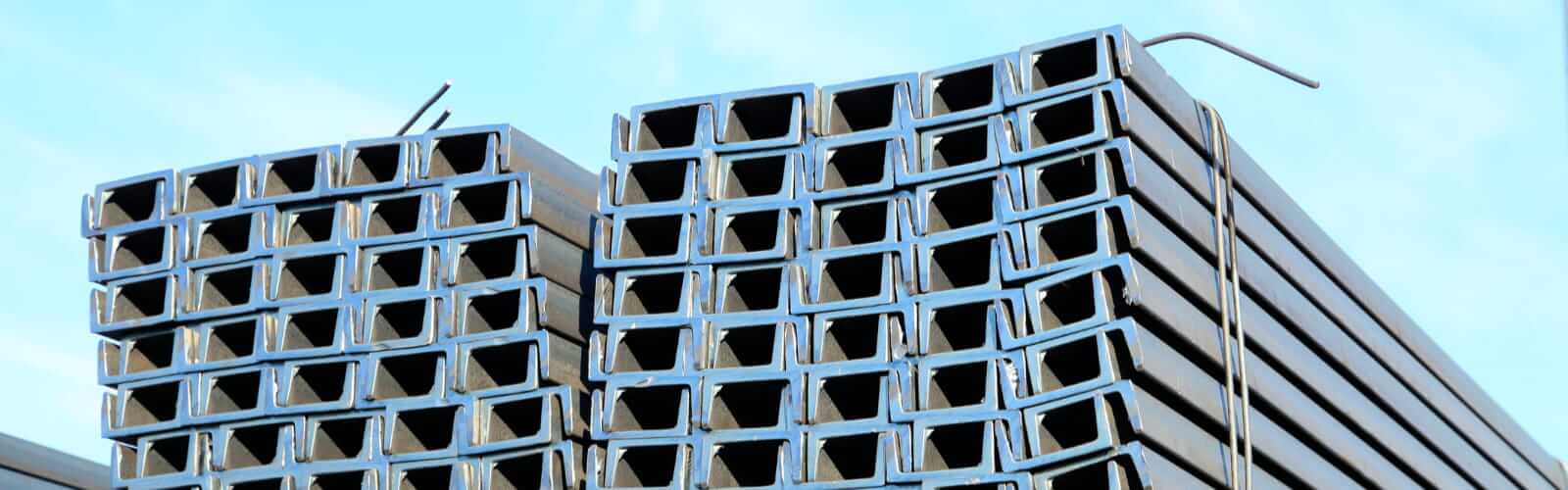
Most metalwork projects reach a point where something needs to be held in place, framed, or protected along an edge, and the material doing that job is often an aluminium channel. It is one of the most versatile extruded profiles available, but choosing among the different types is rarely explained clearly in a single place.
There are three main profiles to know:
- U channel holds panels and sheet edges on three sides, with parallel flanges.
- C channel has asymmetric flanges suited to structural and framing work.
- Lipped channel adds inward returns for greater stiffness and load resistance.
Each has a clear purpose and a set of applications where it performs best. Here is how to tell them apart and choose the right one for your project.
The 3 Aluminium Channel Profiles You Need to Know
Aluminium channel is an extruded profile with an open, three-sided cross-section. According to the Aluminium Federation (ALFED), the alloys used for architectural and structural profiles, primarily 6060, 6063, and 6082, offer tensile strengths of 190-310 MPa [1].
The extrusion process allows precise geometries to be formed to tight tolerances, which is what makes channel profiles useful across such a wide range of applications: holding panels, framing assemblies, creating tracks, and protecting edges.
U Channel
The U channel has two equal, parallel flanges rising from a flat base. Slide a panel or sheet edge into it, and the profile holds on three sides, producing a stable finish without additional fixings. Used for edging glass panels, framing display boards, protecting sheet metal edges, and door and window tracks.
C Channel
C channel has asymmetric flanges, namely one leg longer than the other, which makes it better suited to structural work. Common applications include framing, bracing, shelving supports, and fabrication, in which the channel serves as a load-bearing or connecting member.
Lipped Channel
Lipped channels add inward-facing returns at the flange ends, increasing stiffness along the open edge. It is the standard choice for partitioning systems, sliding tracks, and applications where the profile carries a meaningful load or needs to resist distortion under repeated use.
Why Aluminium Works So Well as a Channel Profile
Aluminium's properties make it a strong fit for channel profiles across a wide range of environments, with three characteristics worth knowing:
- Weight.
- Corrosion resistance.
- Lasting performance.
According to ALFED, aluminium has a density of 33% that of steel. Through correct design, it produces a 40–50% weight saving while still matching steel's engineering strength. For channel profiles used in framing or tracking applications, that weight difference makes installation faster and reduces the structural load on whatever the channel is fixed to [2].
Corrosion resistance is equally useful. Aluminium naturally forms a protective oxide layer known as alumina, which ALFED describes as a hard, self-healing barrier that gives aluminium the highest corrosion resistance of most metals. That protection applies from first use without additional coating, which is why aluminium channel performs well both indoors and in external or damp environments. Where appearance matters, an anodised finish adds a durable surface layer and improves long-term resistance to marking [3].
How to Choose the Right Profile for Your Project
The choice between U channel, C channel, and lipped channel comes down to what the profile needs to do:
- U-channels suit panel retention, such as glass, board, or cladding, where the parallel flanges hold the inserted material evenly on three sides.
- C channels, or lipped channels, provide greater rigidity for structural work, framing, and load-bearing applications.
- A lipped channel is worth specifying over a C channel whenever the open edge will be under stress or repeated loading.
Wall thickness and flange dimensions affect load capacity. For straightforward applications, such as edging a panel or tracking a sliding door, a standard stocked size will suffice. For more demanding work, it is worth getting advice before ordering.
Why Cut-to-Size Ordering Saves You Time & Waste
Standard extrusion lengths are typically sold in 3m or 6m runs. If your job calls for lengths that do not divide neatly into those increments, you will either have off-cuts you cannot use or spend time on-site cutting and finishing the material yourself.
Ordering aluminium channel cut to your exact dimensions removes that problem. Each length arrives ready to fit, which reduces on-site adjustment and the risk of measurement error. If you are new to specifying metal to exact measurements, our guide on How to Measure & Mark Metal for Precise Cuts Every Time covers the practical steps before you order.
It also reduces aluminium waste directly. While aluminium can be melted and recast repeatedly without loss in quality, ALFED's recycling guidance notes that recycling aluminium requires only 5% of the energy needed to produce the same weight through primary smelting. Generating less scrap in the first place is more efficient than processing it [4].
For trade customers working across multiple jobs, precise pre-cut lengths simplify logistics too. Lengths arrive ready for each application, reducing on-site metalwork.
Our Extrusion Cutting service covers all aluminium channel stock, cut to your specified dimensions with a tolerance of -0/+2mm.
Order Aluminium Channel Cut to Your Exact Dimensions
Choosing between U channel, C channel, and lipped channel is straightforward once you know what each profile is built to do. The right choice means the material arrives ready to fit, with no wasted lengths and no second order. Getting the spec confirmed before you order, including the profile shape, flange dimensions, and finish, is what separates a clean installation from one that requires time-consuming corrections.
Click Metal has supplied cut-to-size aluminium, steel, galvanised steel, and brass to trade and DIY customers across the UK since 1994. Every aluminium channel order is cut to your specified dimensions, with a tolerance of -0/+2mm, 3–5 day lead times, and UK-wide delivery as standard. For bulk or specialist requirements, we can refer you to our parent company, Doré Metals.
Call 01794 526090 or enquire online to discuss your aluminium channel requirements.
External Sources
[1] Aluminium Federation (ALFED), Aluminium Federation, Fact Sheet 04 2020, Aluminium Extrusions: https://alfed.org.uk/wp-content/uploads/2023/10/Aluminium-Extrusion.pdf
[2] Aluminium Federation (ALFED), Aluminium Federation, Why Aluminium? (2021): https://alfed.org.uk/why-aluminium/
[3] Aluminium Federation (ALFED), UK Aluminium Industry Fact Sheet 6, Aluminium - The Metal: https://alfed.org.uk/files/Fact%20sheets/6-aluminium-the-metal.pdf
[3] Aluminium Federation (ALFED), UK Aluminium Industry Fact Sheet 5, Aluminium Recycling: https://alfed.org.uk/files/Fact%20sheets/5-aluminium-recycling.pdf
Recent Posts


