

- Material
-
- Aluminium 61
- Brass 8
- Stainless Steel 8
- Galvanised Steel 1
- Mild Steel 1
What Is the Best Steel Section for Load-Bearing Beams
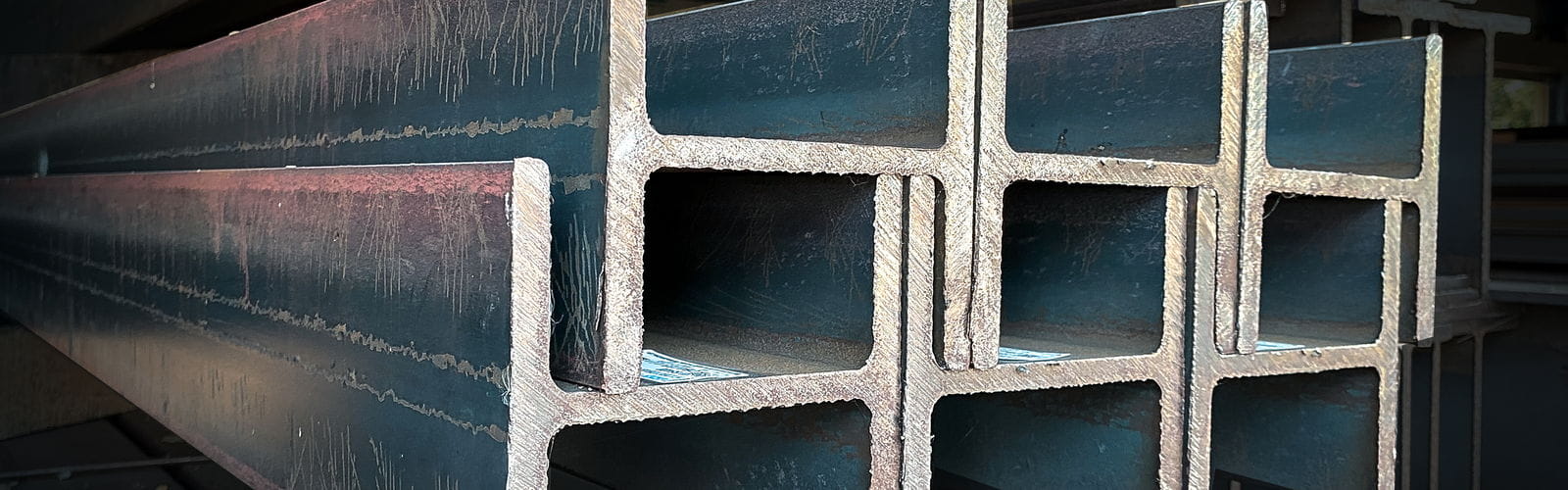
Choosing the best steel section for a beam depends on the span it has to cover and the load it must carry, and this can often trip people up. The answer is that a universal beam suits heavier loads and longer gaps, while a box section is often enough for lighter load-bearing frames such as workshop benches, mezzanine supports and garden structures.
You need to get this right as choosing wrongly can mean a beam that sags under weight, or steel you have paid for but did not need. This guide explains how beams resist bending, compares the common profiles and shows how size and strength fit together. To begin, it helps to understand exactly what a beam is being asked to do.
What Makes a Steel Section Suitable for Load-Bearing Work?
Every beam has one main job, which is to carry weight across a gap without bending too far. When a load sits on a beam, the metal along the top edge is squeezed while the metal along the bottom edge is stretched, and that is what makes the beam curve. We call the force behind this the 'bending moment', and it's this force that grows as the span gets longer, much like a longer spanner gives you more turning force.
That is why structural steel profiles are shaped to place as much metal as possible away from the centre line, where it resists bending best. A deep, well-proportioned profile will carry far more than a plain strip of similar weight, so a good beam is about shape as much as size. Because shape matters so much, the next step is to see where each common profile earns its place.
What Is the Best Steel Section for a Beam?
So, what is the best steel section for a beam? In short, the right choice depends on the job, so here is how the four most common profiles compare for DIY and light trade use:
- Universal Beam (UB): The strongest option for long spans and heavy loads, and the modern replacement for older RSJs, or rolled steel joists. These are the usual choice for floors and openings.
- Box Section: Hollow, square or rectangular, and strong in every direction, which makes box section ideal for posts, frames and workshop builds.
- Angle Iron: An L-shaped profile that suits supports, brackets and bracing rather than main beams.
- Flat Bar: Easy to cut and fix, but weak when loaded on its edge, flat bar works best as a strengthening strip or a simple support.
Whichever profile you lean towards, its size and thickness decide how much it can really carry.
How Do Size and Wall Thickness Affect Beam Strength?
Once you have chosen a profile, its size does most of the work. Depth matters most, because doubling the depth of a solid rectangular beam makes it roughly eight times stiffer, while doubling the width only doubles it. For this reason, a tall, narrow profile outperforms a short, wide one when fitted the right way up.
Thicker walls on a hollow profile add strength too, but only up to a point, because extra metal near the centre does little to resist bending. Easily one of the most influential factors of all is span. Why? Because if you stretch the same beam over a longer gap, the bending moment rises while the beam deflects far more, so a steel section that copes easily at one metre may sag badly at three.
So, size is important, but it isn't the whole picture. Two beams of identical dimensions can behave differently, simply because they are manufactured from two different types of steel.
Does Steel Grade Matter? S275 vs S355
Steel grade matters a lot, because the grade tells you how much stress the steel can take before it bends permanently.
S275 is the everyday option for structural steel, and it is perfectly adequate for most DIY and light trade projects, and for a short, lightly loaded span it will rarely let you down. S355 is stronger for the same size, which means a smaller profile can often carry the same load. As a result, the best steel section for a beam is not always the biggest one.
It is worth remembering, however, that a higher grade does not make a beam stiffer. On longer spans, where sagging is the concern, a deeper profile will help more than a stronger grade. With the profile, size and grade in mind, you are ready to turn your choice into an order.
If you are unsure which grade suits your project, our team at Click Metal will be more than happy to help.
Choosing Your Steel Section and Ordering It Cut to Size
Once you know the best steel section for a beam in your project, ordering is straightforward. We cut every product to your length with a general tolerance of plus or minus 2mm, there is no minimum order charge, and most orders are processed and despatched within 48 hours, so it suits a single length or a full frame's worth.
For lighter frames, our box section range is a good place to start. Before you order, have these details to hand:
- Required length
- Section size
- Wall thickness
- Preferred grade
Check with us, because our range may already cover what you need. If you are looking for universal beams, RSJs or any other metal supplies we do not carry, our parent company, Doré Metal Services, can help.
Talk Through Your Beam Requirements Before You Order
Choosing a beam comes down to span, load, profile, size and grade, and getting each one right keeps a project safe and sound. For anything genuinely load-bearing, have your design checked by a structural engineer or building control before you cut or fix anything.
If you are unsure about sizes or what we stock, call us on 01794 526090 or use our contact form, and our team will help you order with confidence.
Recent Posts


