

- Material
-
- Aluminium 61
- Brass 8
- Stainless Steel 8
- Galvanised Steel 1
- Mild Steel 1
Does Patina Work on Brass? How Brass Forms Patina Over Time
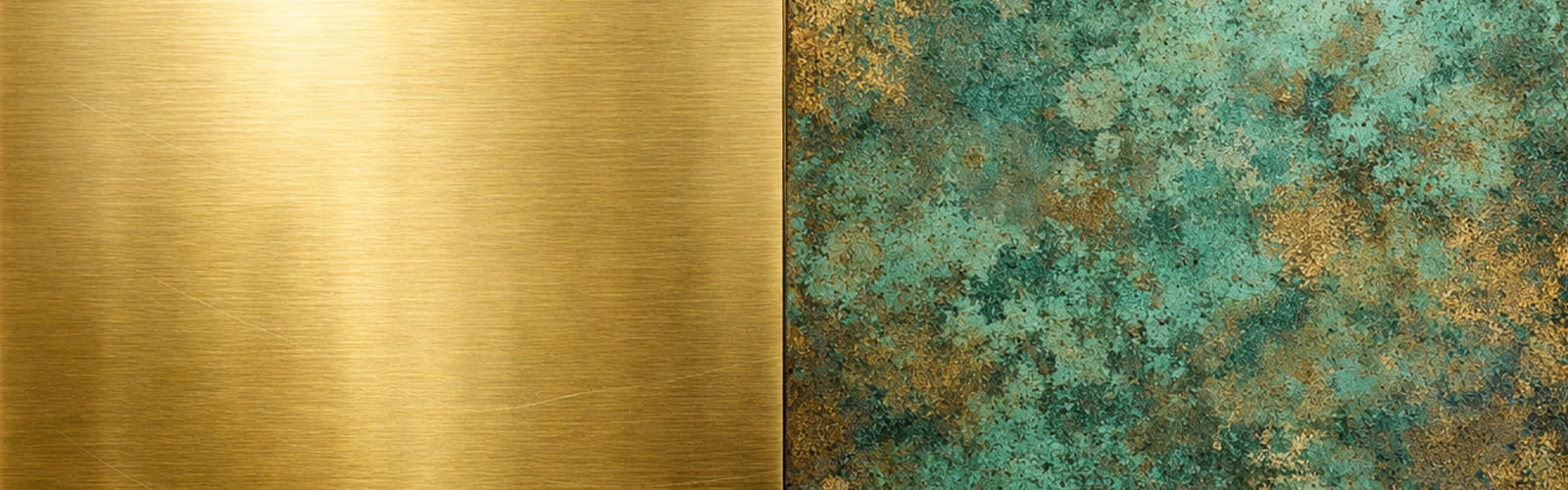
Brass naturally develops patina as it reacts with oxygen, moisture, and environmental exposure. So, does patina work on brass in architectural and interior settings? Yes. This gradual oxidation darkens the surface and forms a stable layer that helps protect the metal beneath.
Due to this natural ageing process, brass is often specified for projects where materials are expected to develop character over time. Façade panels, trims, feature walls, and other design elements can all benefit from this evolving finish. Materials such as brass sheets are commonly used for these applications because they can be cut precisely and installed across large surfaces.
Understanding how patina forms helps designers, fabricators, and builders plan how brass will age, so the finish develops consistently while retaining the material’s durability and visual appeal.
How Patina Forms on Brass
Patina is the surface film that forms on copper-based metals when they react with the atmosphere. In architectural environments, this weathering process is influenced by moisture and airborne pollutants.
The Copper Development Association (CDA) explains that patination occurs more quickly in marine and industrial settings, where pollutants accelerate surface reactions. The resulting layer bonds tightly to the metal and helps protect it from further weathering [1].
As brass is a copper alloy, it develops a similar protective finish over time. The handbook notes that many copper alloys gradually weather to grey-green tones, although the final appearance depends on alloy composition and site conditions.
For example:
- C26000 cartridge brass typically weathers to a yellowish, grey-green finish.
- C22000 commercial bronze develops a brown to grey-green patina over several years.
Environmental conditions also influence the process. Factors such as temperature, humidity, drainage, and building orientation can affect both the rate of patination and the evenness of surface ageing across a façade.
Why Brass Is Used in Architectural Design
Brass is widely used in architecture because copper alloys are often specified for prominent building features where durability and visual character are important.
Stuart Dean notes that copper surfaces may change in about 5 to 8 years in industrial seacoast environments, 8 to 12 years in city industrial areas, and 15 to 20 years in typical urban regions, with copper alloys such as brass developing similar finishes depending on copper content and site conditions [2].
Natural weathering allows façades and architectural details to develop distinctive tonal variation over time.
Exterior Architectural Uses
Profiles such as brass angles for architectural detailing are commonly used to frame panels and finish exposed edges cleanly.
Interior Design Applications
Brass is also used in high-visibility areas such as feature walls, joinery accents, and decorative trims. Products such as our brass flat bars used for decorative trims provide clean linear edges for interior detailing.
Designing Brass Installations for Long-Term Performance
When specifying brass for architectural use, corrosion behaviour should be considered throughout the design and operational life of a structure. The Health and Safety Executive (HSE) explains that corrosion is one of the most common causes of deterioration in metal components, which is why exposure conditions must be considered when selecting materials [3].
Rather than focusing only on installation, designers should also consider how metal components will be inspected and maintained during service. The HSE notes that corrosion damage can sometimes occur locally rather than across the entire surface, meaning structural details such as joints, drainage points, and fixings require careful design attention.
Planning for inspection and maintenance, therefore, forms part of a responsible specification. Structures should allow safe access for monitoring and cleaning so potential corrosion issues can be identified early.
Key design considerations include:
- Planning access for inspection and maintenance.
- Avoiding hidden joints where corrosion may develop.
- Ensuring drainage prevents trapped moisture.
- Selecting materials suitable for the operating environment.
- Allowing safe access for cleaning and routine monitoring.
Why Brass Supports Long Life Building Design
Patinated brass is often specified where materials are expected to remain functional and visually suitable over long building lifespans. Instead of relying on applied coatings or surface treatments, brass develops a natural protective layer that helps preserve the metal as it ages.
This approach reflects a wider shift in the construction sector toward materials that support whole-life building performance. The UK Green Building Council (UKGBC) reports that building materials account for around 19% of the United Kingdom’s total greenhouse gas emissions, highlighting the importance of selecting materials that remain in service for many years [4].
As brass develops a stable patina, it can often remain in place without the need for replacement finishes or protective coatings. In projects where durability and maintenance planning are important, this can contribute to more sustainable building strategies.
Design teams may therefore evaluate brass not only for its visual qualities but also for its role in long-term building performance.
Architectural considerations may include:
- Selecting materials capable of long service lifespans.
- Reducing the need for additional coatings or finishes.
- Specifying metals that weather naturally over time.
- Supporting whole life carbon strategies in building design.
- Prioritising materials that remain serviceable for decades.
Order Reliable Brass Materials for Architectural Projects
When brass is specified for façades, trims, and decorative detailing, both material quality and cutting accuracy are important. Projects that rely on natural patination require brass that performs reliably and integrates seamlessly into the wider design.
Click Metal supplies cut-to-size brass products for fabrication, renovation, and architectural applications across the UK. With a wide range of architectural brass products available to order and more than 70 years of experience in the metals industry across the wider group, we help designers, fabricators, and builders source materials suitable for both practical and decorative use.
Call 01794 526090 or enquire online to discuss your brass requirements, receive guidance on suitable materials, or order precision-cut brass for your next project.
External Sources
[1] The Copper Development Association (CDA), Copper In Architecture: https://www.copper.org/publications/pub_list/pdf/A4050-Architectural-Handbook_print.pdf
[2] Stuart Dean, Architectural Metal Solutions: https://www.stuartdean.com/resource/architectural-metal-solutions/
[3] The Health and Safety Executive (HSE), Corrosion / Selection of Materials: https://www.hse.gov.uk/comah/sragtech/techmeasmaterial.htm
[4] The UK Green Building Council (UKGBC), Growing the Market for Low-Carbon Building Materials: https://ukgbc.org/news/growing-the-market-for-low-carbon-building-materials/
Recent Posts


