

- Material
-
- Aluminium 61
- Brass 8
- Stainless Steel 8
- Galvanised Steel 1
- Mild Steel 1
Why Is Brass Good for Musical Instruments? A Guide on Sound
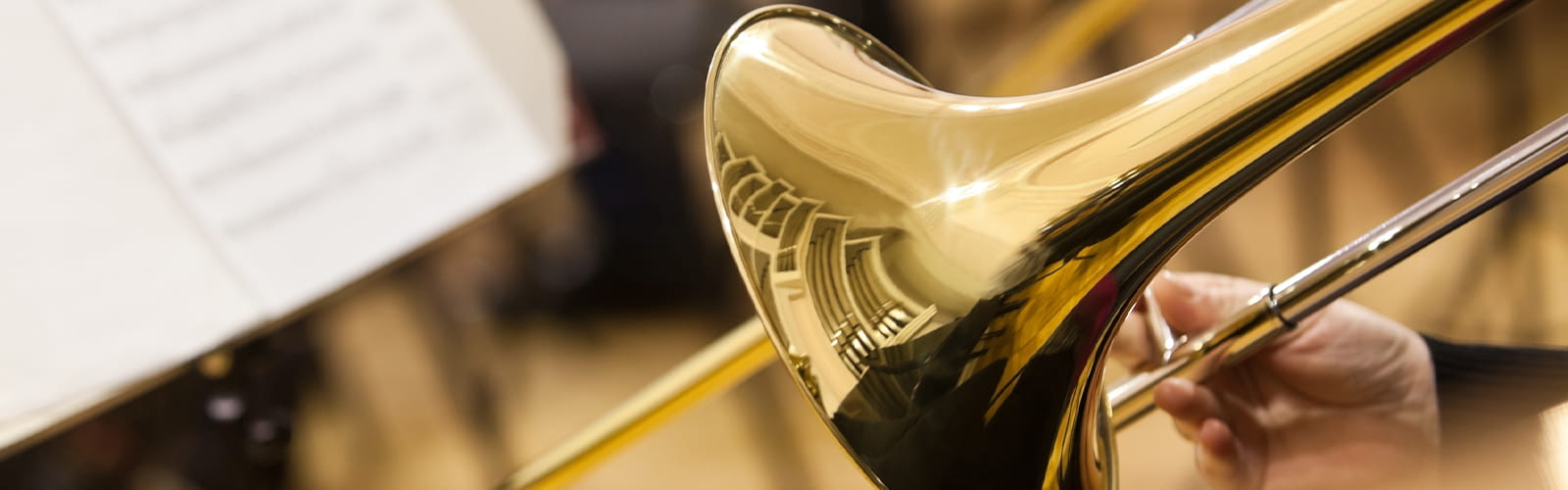
Brass has been used in musical instruments for centuries because it supports clear sound projection, controlled resonance, and long-term durability. These qualities are especially important for wind instruments, where tone consistency and reliable response shape both performance and playability.
For musicians, brass’s benefits are felt in an instrument’s response to breath and technique, while makers value its predictable shaping and stability as sound travels through it. This explains brass’s core role in wind instruments like trumpets, trombones, and horns.
This guide explores how brass performs acoustically, why it suits modern instrument manufacturing, and what these qualities mean for tonal stability and long-term performance.
What Is Brass? Why It Matters for Instrument Design
Brass is a copper-zinc alloy, meaning it is made by mixing copper and zinc together. Its composition can be adjusted to achieve specific levels of strength (how much force it can withstand) and workability (how easily it can be shaped or formed). This balance allows the material to be formed with precision while remaining rigid enough to support vibration and internal sound reflection, which are important for musical instruments.
In instrument design, tubing thickness, curvature, and joins influence how sound travels. Brass lets makers control these precisely, delivering consistent tone and response. When forming larger components such as bells or decorative elements, brass supports controlled shaping and ensures consistent tone and feel across instruments of the same design.
How Brass Supports Resonance, Projection & Tonal Stability
Brass works well in wind instruments because it transmits vibrational energy through the tubing in a controlled, consistent way, influencing resonance, projection, and tonal stability for the player.
In practical terms, the acoustic properties of metals like brass support several key outcomes:
- Helps vibrations travel evenly through the instrument body
- Supports stable resonance for consistent projection
- Contributes to clearer pitch response across registers
- Produces a rounded, controlled tonal character
- Maintains reliable acoustic behaviour across playing conditions
From a materials perspective, smoother profiles, such as the brass round bar, are used for consistent vibration and tonal stability. Where airflow matters, brass half-round moulding reduces turbulence while maintaining predictable acoustic behaviour.
Research into acoustic sound recording illustrates the same principle. The Science Museum Group Journal describes how early acoustic recording relied on sound energy moving mechanically through solid components, so material choice really does affect the transmission and preservation of vibration [1].
Why Brass Is Practical to Shape, Join & Assemble
Brass supports precise fabrication without sacrificing strength. This is crucial for complex components like curved tubing, bells, and slides, where accuracy affects fit and performance.
Components that require reinforcement or accurate alignment are often produced from brass flat bar, which provides consistent dimensions for secure joining and repeatable assembly. This reliability helps maintain build quality across individual instruments and replacement parts.
During fabrication, brass offers practical advantages that support high standards in instrument manufacturing:
- Maintains tight tolerances during cutting and forming
- Supports secure soldering and joining without distortion
- Performs reliably across multi-part assemblies
For machined fittings and adjustment components, our brass hexagonal bar provides flat, six-sided surfaces for machinery to grip during shaping or assembly. This design feature allows precise positioning without distorting the brass, supporting consistent manufacturing results in both new projects and repair work.
Designed for Repair, Servicing & Long-Term Use
Brass instruments are well-suited to extended use because they can be serviced, repaired, and returned to reliable playing condition without affecting performance. The material tolerates repeated cleaning, adjustment, and component replacement while maintaining structural stability and tonal response.
During repair or refurbishment, profiles such as the brass square bar enable technicians to accurately reproduce replacement parts while preserving an instrument’s original feel and tonal quality. This predictability supports efficient servicing and reduces the need for full component replacement.
Evidence from UK music services illustrates this durability in practice. A University College London (UCL) report by Purves and Arnott found that whole-class brass instruments, including trombones, are often kept in active use for over 15 years when regularly serviced [2]. The same research reports that 77.9% of UK music services routinely repair faulty instruments, while 57.6% operate proactive inspection programmes. These findings just go to show how brass can support a long service life when paired with structured care.
Recyclability & Responsible Use in Instrument Making
Brass supports responsible instrument manufacturing because it is highly recyclable and can be remelted and reused with minimal loss of performance. This allows offcuts and surplus material generated during fabrication to be recovered rather than discarded, supporting more efficient material use.
In the UK, this has growing relevance as pressure has increased on metal supply chains. The UK Critical Minerals Strategy sets a target for 20% of annual industrial demand for critical minerals to be met through recycling by 2035 [3]. While brass itself is not classed as a critical mineral, it forms part of copper-based supply systems affected by the same constraints.
For workshops and makers, this translates into practical efficiencies:
- Reduces waste generated during cutting and forming
- Allows surplus material to be reprocessed without quality loss
- Supports more resilient, lower-impact manufacturing workflows
By supporting the use of circular materials at the fabrication stage, brass aligns with UK guidance on resource-efficient manufacturing without compromising performance.
Source Brass Cut-to-Size for Instrument Making & Repair
Choosing the right brass matters beyond fabrication. Structural elements such as mounting frames and support brackets are often produced from brass angle, which provides strength and dimensional stability for accurate assembly. For makers working with trumpet materials and other wind instruments, correct sizing and specification help improve consistency, reduce waste, and keep projects moving smoothly from design to build.
Click Metal supplies brass cut to exact measurements for musical instrument manufacture and repair. Customers can explore materials via our click by material hub, review supported sectors, and access metal processing services where additional preparation is needed. Practical guidance is available through our blog, with ordering details covered in our general FAQs.
Call 01794 526090 or enquire now to discuss brass specifications, request cut-to-size materials, and arrange UK-wide delivery.
External Sources
[1] The Science Museum Group Journal, “material choice affects the transmission and preservation of vibration”: https://journal.sciencemuseum.ac.uk/article/acoustic-recording/
[2] University College London (UCL), “report by Purves and Arnott”: https://discovery.ucl.ac.uk/id/eprint/10208853/3/Purves_PurvesAndArnott2025_FinalReportText.pdf
[3] GOV.UK, “The UK Critical Minerals Strategy”: https://www.gov.uk/government/publications/uk-critical-minerals-strategy
Recent Posts


